The number on the pack
Denier explained: how to read 8 to 400 on a MANZI pack
Every pair of tights carries one number that decides what it is for, and most packs print it smaller than the brand name. Here is what denier measures, why 15 and 20 feel so different, where the steps of the MANZI range fall, and why the fibre line under the number matters almost as much.
18 minute read · 2 sources, read 5 September 2026
Start with the pair
MANZI sheer pantyhose to look at first
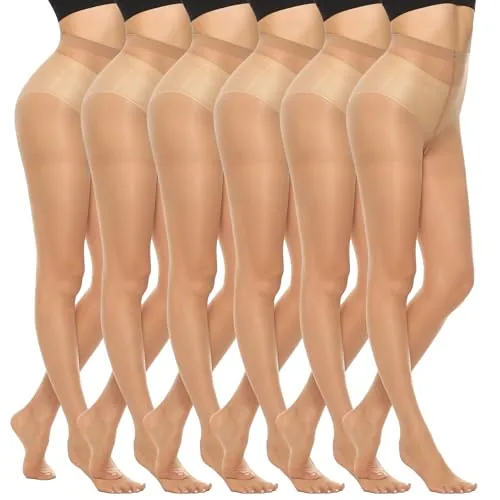
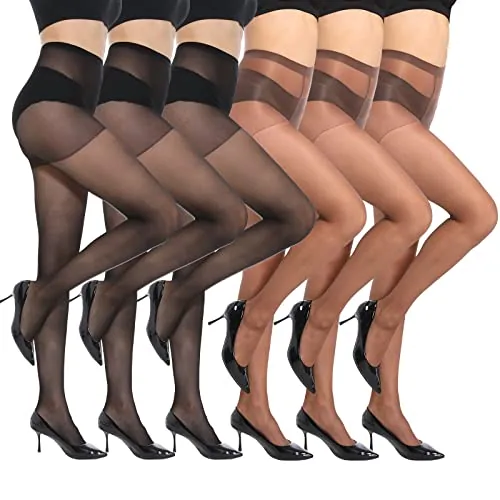
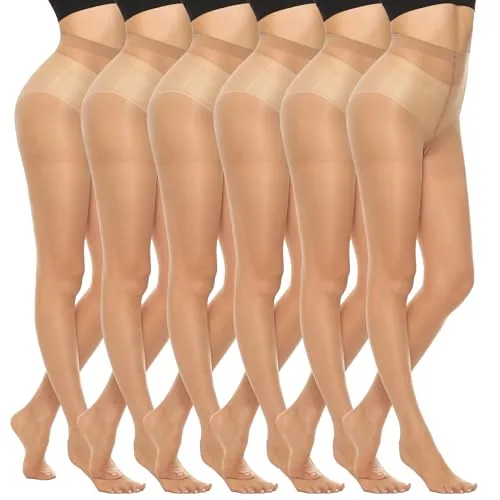
20D Control-Top Pantyhose, 6 Pairs, Black, Coffee
4.1 out of 5 from 2,825 ratings
$15.99
See the spec
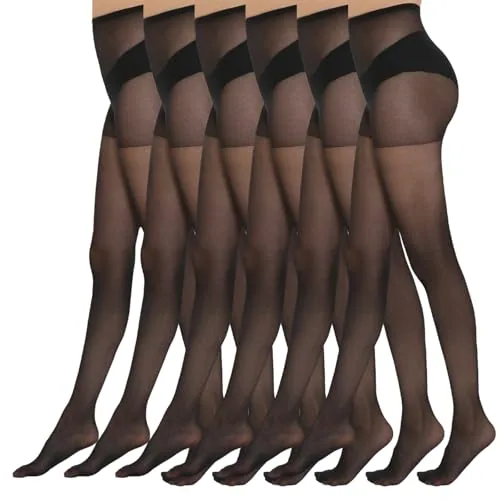
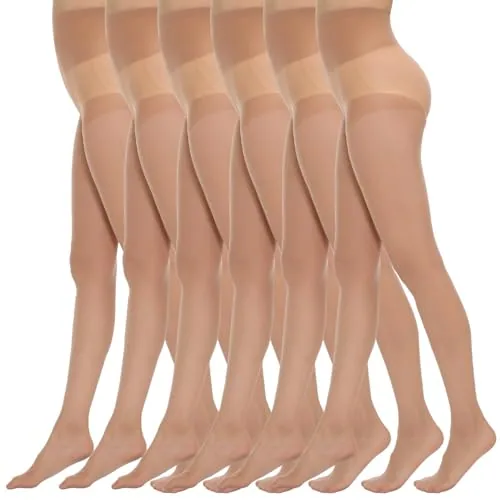
What denier measures
Denier is a weight, not a thickness. It counts how many grams a 9,000 metre length of the yarn weighs, and hosiery has used it since the silk days because a yarn that fine cannot be measured any other way. The dictionary puts it in one line.
unit of fineness for yarn equal to the fineness of a yarn weighing one gram for each 9000 meters
Merriam-Webster, «denier», read 5 September 2026
So a 15 denier yarn weighs 15 grams per 9,000 metres, and a 70 denier yarn weighs 70. The number goes up as the yarn gets heavier, and a heavier yarn is a thicker one, so on the leg the scale runs from see-through to solid.
What the number does not do is describe the knit. Two 20 denier pairs from two knitting floors can look different because one is knitted tighter, one has a matte finish and one a sheen, and one uses a spandex core that pulls the loops closer together. The number is the yarn. The pair is the yarn plus the machine plus the finish.
Most packs print the denier in a corner, smaller than the size and smaller than the brand. On this site it is the first thing on every card, because it is the first thing that decides what a pair is for.
The scale, step by step
The numbers cluster. Knitting floors do not make every denier from 8 to 400. They make a handful of weights that the market has settled on, and the MANZI range follows the same steps. Here is the whole scale as it looks on the leg, with the number of MANZI shades knitted at each step today.
| Denier | Reads as | On the leg | MANZI shades |
|---|---|---|---|
| 8–12D | ultra sheer | the leg shows through completely, and the pair is an evening, not a commute | 5 |
| 15D | sheer | the classic dress sheer: evens the tone, catches on a ring | 34 |
| 20D | sheer | the everyday weight of the sheer bench, where most six-packs sit | 47 |
| 30D | sheer to semi-opaque | a commute sheer, and where the support pairs live | 21 |
| 40D | semi-opaque | a little leg shows, the weight of the dance bench and the footless pairs | 60 |
| 50–60D | semi-opaque | the boundary: a dark 50D reads as opaque, a nude 50D does not | 8 |
| 70–80D | opaque | solid colour from across the room, in a microfiber knit | 65 |
| 100–120D | opaque | the pair behaves like a legging | 9 |
| 200–400D | fleece-lined | warmth first; fake translucent pairs are 200D and up | 17 |
Three things are worth knowing about the steps. First, 15 and 20 are not neighbours in feel: 15 is the dress sheer that a ring will catch, 20 is the one that survives a working day, and the difference is a third more yarn.
Second, the semi-opaque boundary moves with the shade. A black 50 denier pair reads as opaque because the colour hides the skin. A nude 50 denier pair still shows the leg. Third, the jump from 120 to 200 is not a jump in yarn weight so much as a change of construction: the 200 and 400 denier pairs are fleece-lined, and the number describes the shell and the lining together.
What a sheer pair does not do is last. Below 30 denier the yarn is finer than a hair, and a dry heel, a rough nail or a bag zip will open it. That is the class, not the pair, and it is why the sheer bench sells in packs of two, three and six.
20D Control-Top Pantyhose, 6 Pairs, Black, Coffee
4.1 out of 5 from 2,825 ratings
$15.99
See the spec
Where the MANZI range sits
The eight benches on this site are sorted by how a pair is knitted, and denier runs through all of them. The table counts, for each bench, the shades that print a denier and the shades that do not. Where the maker names no number, the card carries a word instead, sheer or opaque, and no invented figure.
| Bench | Denier range printed | Shades with a number | Shades with a word only |
|---|---|---|---|
| Sheer Pantyhose | 5–30 | 73 | 33 |
| Opaque Tights | 40–120 | 78 | 24 |
| Ballet & Dance Tights | 30–40 | 25 | 34 |
| Fleece-Lined & Thermal Tights | 120–400 | 9 | 3 |
| Thigh Highs & Stay-Ups | 15–120 | 18 | 34 |
| Knee Highs & Socks | 15–40 | 25 | 31 |
| Fishnet & Patterned Tights | 20–50 | 7 | 38 |
| Girls' Tights | 40–400 | 32 | 22 |
The pattern is plain. The sheer bench and the opaque bench print their numbers on almost every pack, because the number is the product. The dance bench mostly says 40 denier when it says anything, because dance tights are one weight. The thigh-high and knee-high benches print fewer numbers, and the patterned bench almost none: a fishnet has no meaningful denier, since the holes matter more than the yarn.
The steps with their own page on this site are the ones the range actually knits: 10D, 15D, 20D, 30D, 40D, 50D, 70D, 80D, 120D, 400D. Each page holds every pair at that weight whatever bench it comes from.
What denier does not tell you
Four things, and they matter as much as the number.
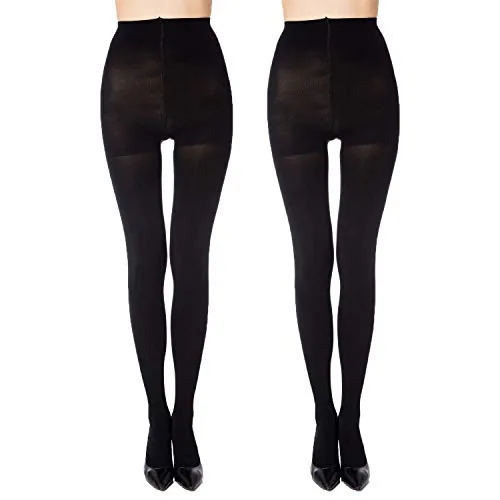
The waist. A control top is a knitted panel in the brief that holds the stomach flat and gives the waistband grip. A sheer-to-waist pair has no panel and no visible line under a fitted dress, and less grip. A high waist sits above the navel. None of this shows in the denier, and all of it shows on the card.
The foot. Footed is the default. Footless ends above the ankle for a shoe or a boot and is not a legging. Toeless opens the toes for a sandal and leaves a band across the ball of the foot that shows in a closed shoe. Convertible has an opening under the arch that rolls either way, and it belongs to the dance bench.
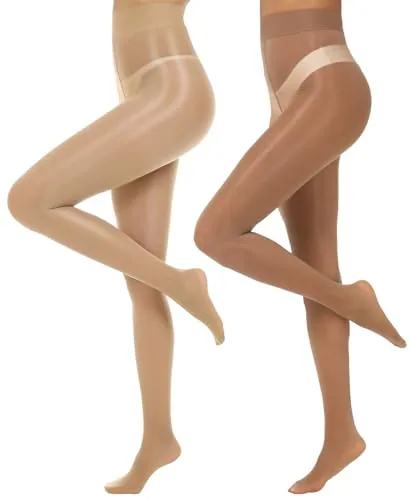
The finish. Two 20 denier pairs can be matte, silky or glossy. Glossy pairs, the oil-shine kind, photograph as a shine on the leg and are a different look from a matte sheer of the same weight.
The shade. The nude scale runs from natural through light suntan and suntan to tan and coffee, and a shade name on one knitting floor is not the same tone on another. The shade chart shows the MANZI names side by side.
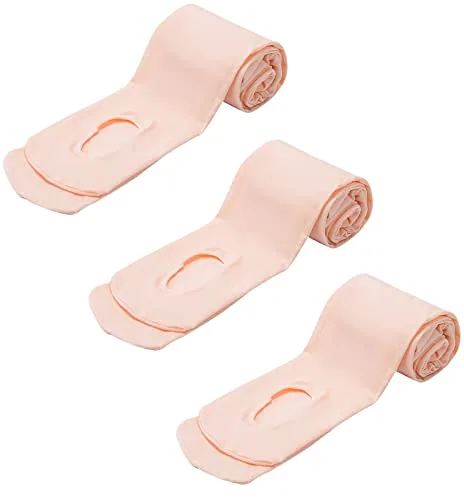
40D Convertible Girls' Dance Tights, 3 Pairs II, Ballet Pink
4.6 out of 5 from 5,705 ratings
$13.29
See the spec
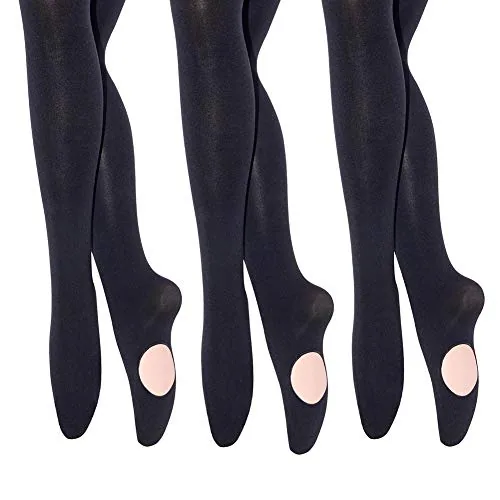
40D Convertible Girls' Dance Tights, 3 Pairs IV, Black
4.6 out of 5 from 5,705 ratings
$13.29
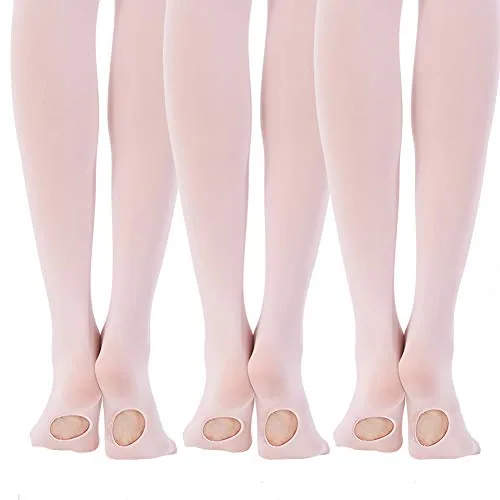
40D Convertible Girls' Dance Tights, 3 Pairs VI, Pink
4.6 out of 5 from 5,705 ratings
$13.99
See the spec
The fibre line under the number
Under the denier, the pack prints a fibre line: 88% nylon, 12% spandex, or a pair of numbers close to those. That line is not the maker's choice of wording. It is required, and the rules for it are federal. The regulation under the Textile Fiber Products Identification Act sets how fibres are named and in what order, and it has a rule for the small percentages that matter in hosiery.
no fiber present in the amount of less than 5 percent of the total fiber weight shall be designated by its generic name or fiber trademark in disclosing the constituent fibers in required information, but shall be designated as “other fiber.”
16 CFR § 303.3(a), eCFR, read 5 September 2026
The same section goes on to allow an exception for a fibre that has a clear function at that small amount, and gives spandex as its example. That exception is the reason a sheer pair can say 4% spandex on the pack: the spandex is what makes the yarn recover, and the rule lets it be named. The regulation also says what happens when a brand name for a fibre appears next to the generic one.
A non-deceptive fiber trademark may be used on a label in conjunction with the generic name of the fiber to which it relates.
16 CFR § 303.17(a), eCFR, read 5 September 2026
What this means on a MANZI pack: nylon and polyamide are the same generic fibre, and both words appear across the range. Spandex and elastane are the same fibre too. Across the pairs on this site today, 190 pages print a nylon or polyamide percentage, 184 print spandex or elastane, 0 print cotton, and 500 print no fibre line in the pack text at all. The spandex share runs from 4% to 38%, and the higher figures belong to the control-top and support pairs, where recovery is the job.
We print the fibre line as the maker prints it and do not test the yarn ourselves. Where the pack text carries no fibre line, the page carries none.
Price per pair along the scale
Because the sheer bench sells in packs, the price on a card is not the price of a pair. The table below divides each price by the number of pairs in the pack and reports the lowest, the median and the highest figure at each weight, from the pairs on this site today. Prices are from our last update, printed in the footer.
| Denier | Pages | Lowest per pair | Median per pair | Highest per pair |
|---|---|---|---|---|
| 8–12D | 9 | $5.00 | $5.00 | $10.99 |
| 15D | 38 | $1.30 | $7.99 | $16.99 |
| 20D | 82 | $2.50 | $3.50 | $15.99 |
| 30D | 35 | $5.00 | $9.59 | $16.99 |
| 40D | 93 | $3.00 | $5.33 | $14.99 |
| 50–60D | 18 | $5.99 | $10.99 | $12.99 |
| 70–80D | 92 | $1.83 | $6.79 | $14.99 |
| 100–120D | 13 | $4.00 | $7.50 | $9.99 |
| 200–400D | 26 | $3.79 | $5.50 | $17.99 |
The shape is the one you would expect: the sheers are cheapest per pair because they are packed by the six, the fleece-lined pairs are dearest because there is the most yarn in them, and the dance pairs sit in the middle. What the table hides is that a 15 denier pair bought singly and a 20 denier pair bought in a six-pack are not the same purchase: one is for an evening, the other for a drawer.
How to choose by number
Start from the day, not from the drawer. A dinner in a dress wants 8 to 15. A working day wants 20, and if the commute is long, 30. A skirt in October wants 40 to 70, and the colour decides whether the pair reads as sheer or solid. A skirt in January wants 200 or more, and the fake-translucent pairs are the ones for people who want the sheer look at that weight. A ballet class wants 40 denier convertibles and nothing on the sheer scale at all.
Then the size, which follows height and weight, not dress size. The size chart says which way to round on each bench. Then the waist, then the foot, then the shade. Most of that is on the card, and all of it is on the page.
What no number can do is promise a pair will not run. The only honest answer to that is the pack of six, and the MANZI sheer bench is built on it.
Denier and shade: why the same number looks different
Put a black 30 denier pair next to a natural 30 denier pair and the black one looks a full step heavier. Nothing about the yarn is different. Colour hides skin, and a dark yarn at any weight covers more of the leg than a pale one, so the shade moves a pair along the scale by a step or so in the eye.
The knitting floor knows this, and it is the reason the nude shades stop at 70 denier on most benches while black runs to 120 and beyond: a 120 denier nude would look like a bandage.
The same rule runs the other way inside the nude scale. Natural is the palest tone and shows the most leg through a given weight.
Coffee, the darkest, evens the tone and hides more. A 20 denier natural pair on a fair leg is nearly invisible, and a 20 denier coffee pair on the same leg is a colour. When the number and the look disagree, the shade is usually the reason, and the shade chart puts the MANZI tones side by side so the comparison can be made before the pack is opened.
Finish adds a second layer. A glossy pair reflects light along the shin and reads lighter than its number in daylight and darker at night. A matte pair sits closer to its number. Shimmer pairs, the ones with a metallic thread, read as a texture rather than a weight. None of that changes the yarn, and all of it changes the photograph. That is the reason the cards on this site print the number and the finish on separate lines.
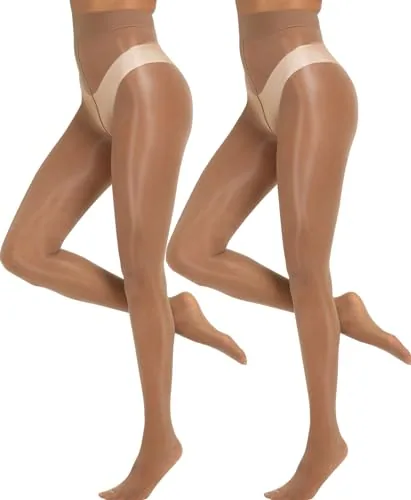
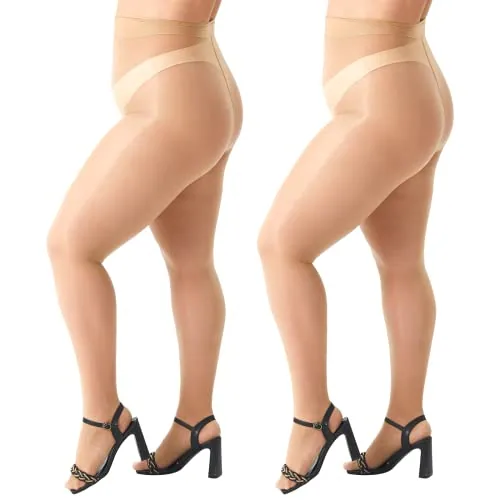
Plus-Size High-Waist Shimmer Tights, 2 Pairs, Natural
3.9 out of 5 from 470 ratings
$16.99
Denier in a pack of six
The sheer bench sells in packs, and the number on the pack applies to every pair inside it. That sounds obvious until a pack mixes shades: three natural and three black, or two black, one nude, one red, one navy and one coffee. Those packs are the same denier throughout, and the mixed shades are there so a drawer holds a week of different outfits from one purchase. The card names the mix and the page lists it in full.
A pack changes the arithmetic of the number. A single 15 denier pair bought for an evening is a pair. Six 15 denier pairs are a policy, a decision that the ring will win sometimes and that the drawer will cover it.
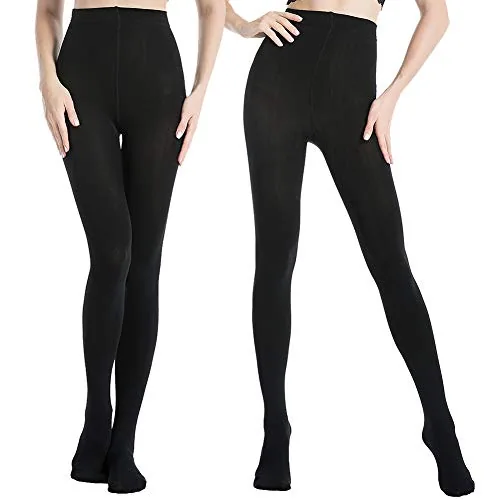
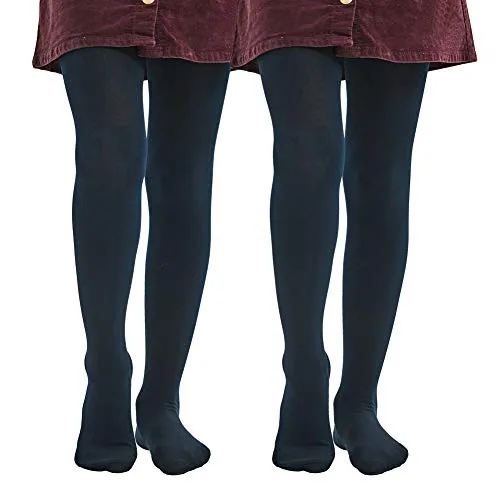
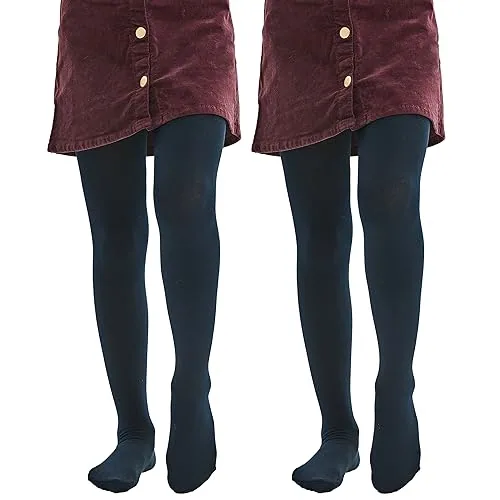
The pairs on this site that come six to the pack are almost all 15 and 20 denier, and almost all control top, because that is what the working week asks for. The 40 and 70 denier pairs come in twos, because an opaque lasts, and the fleece-lined pairs mostly come singly or in twos, because there is a lot of yarn in each.
Here is the pack count against the number across the pairs on this site today, counted on the pages rather than estimated.
| Denier | Single pairs | Packs of 2 to 5 | Packs of 6 and more |
|---|---|---|---|
| 8–12D | 2 | 7 | 0 |
| 15D | 20 | 3 | 15 |
| 20D | 26 | 19 | 37 |
| 30D | 20 | 15 | 0 |
| 40–60D | 22 | 89 | 0 |
| 70–120D | 55 | 41 | 9 |
| 200–400D | 6 | 20 | 0 |
Six mistakes the number does not forgive
Buying 15 for a commute. A 15 denier pair is a dress pair. On a train, against a bag, a coat lining and a seat edge, it lasts a morning. The commute weight is 20 to 30, and the difference on the leg is small.
Buying 70 for July. An opaque pair is a spring and autumn pair. A microfiber at 70 denier under a summer skirt is warm by ten in the morning. The summer weights are 8 to 20, and in the sheer bench there are toeless pairs for a sandal.
Expecting a 40 to be opaque. Forty denier is the boundary. In black it reads as solid. In nude it shows the leg, and on a pale leg in daylight it is a sheer with weight. The dance bench lives here because a dancer wants exactly that: the line of the leg, softened.
Expecting a fleece-lined pair to be a sheer. The fake-translucent pairs photograph like a 20 denier sheer, and on a cold morning at a distance they read like one. Close up, on a dark leg, or under office light, the skin-tone layer is visible for what it is. They are a warm pair with a sheer look, and the order of those words matters.
Sizing up a sheer to make it last. A sheer stretched less runs less, and a size up is looser, so the instinct is right for the wrong reason. A pair that is too big bags at the knee and the ankle and wears at the folds. The size chart by height and weight is the answer, and the rounding rule on the sheer bench is up, not two up.
Reading the number as a promise. No denier promises a pair will not run. A 20 denier from one knitting floor will outlast a 20 denier from another because of the finish, the spandex share and the machine. The number tells you what the pair is for. The pack tells you how many chances you get.
A week by the number
A working wardrobe in the sheer months is three numbers. Monday to Friday is 20 denier, control top, in the shade closest to the leg, six to the pack. Two evenings a month are 8 to 15 denier, single pairs, in the same shade or in black. The commute in a cold week is 30. That is three packs a season and it covers almost everything, and it is the reason the sheer bench is the biggest on the site.
The colder months are two numbers. October to November is 70 denier opaque in black, navy or coffee, two to a pack. December to February is 200 to 400 denier fleece-lined, and the choice is between plain black and a fake-translucent pair for the days that call for a sheer look. Add a 40 denier convertible pair if there is a ballet class in the week, and a fishnet or a patterned pair for the one evening that wants one.
What a wardrobe by the number does not need is a pair for every occasion. It needs the right weight for the day, in a shade close to the leg, in a pack deep enough to survive the ring. The scale at the top of every page on this site is the whole method.
Sources
- denier, Merriam-Webster, read 5 September 2026.
- 16 CFR Part 303, Rules and Regulations Under the Textile Fiber Products Identification Act, eCFR, U.S. Federal Trade Commission, read 5 September 2026.
Before you go
More sheer pantyhose in the range
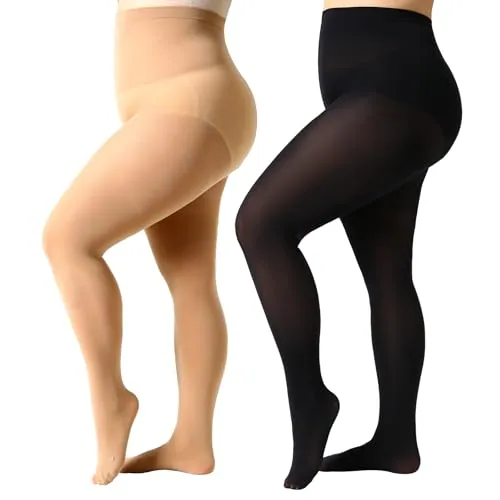
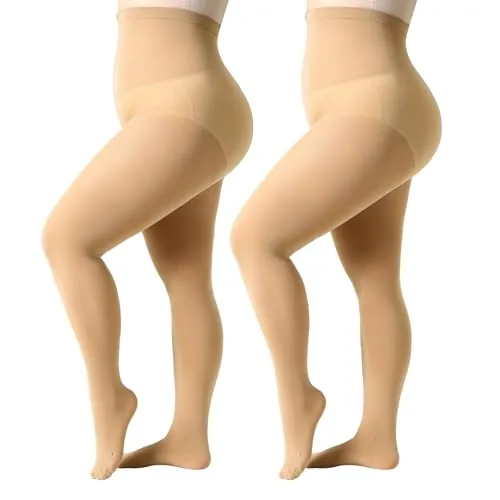
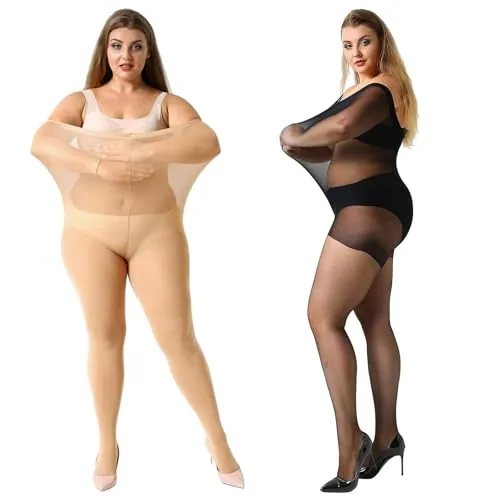
Plus-Size Control-Top Pantyhose, 2 Pairs V, Black, Natural Nude
3.6 out of 5 from 1,574 ratings
$17.99
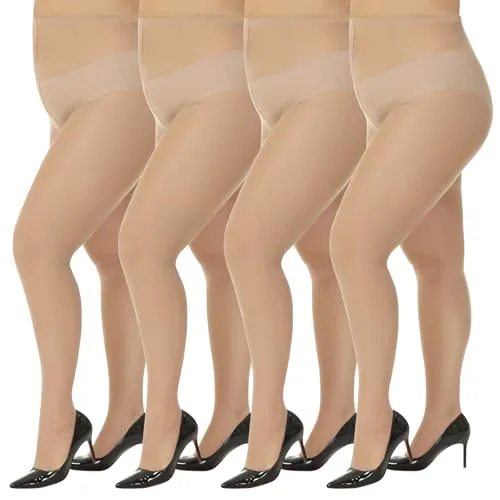
Plus-Size Ultra-Sheer Sheer Pantyhose, 4 Pairs, Natural Nude
4.3 out of 5 from 1,480 ratings
$15.99
See the spec